Nineteenth-century emergence of an anthropocene ecosystem in the deep sea
Revised to Science | preprint on bioRxiv
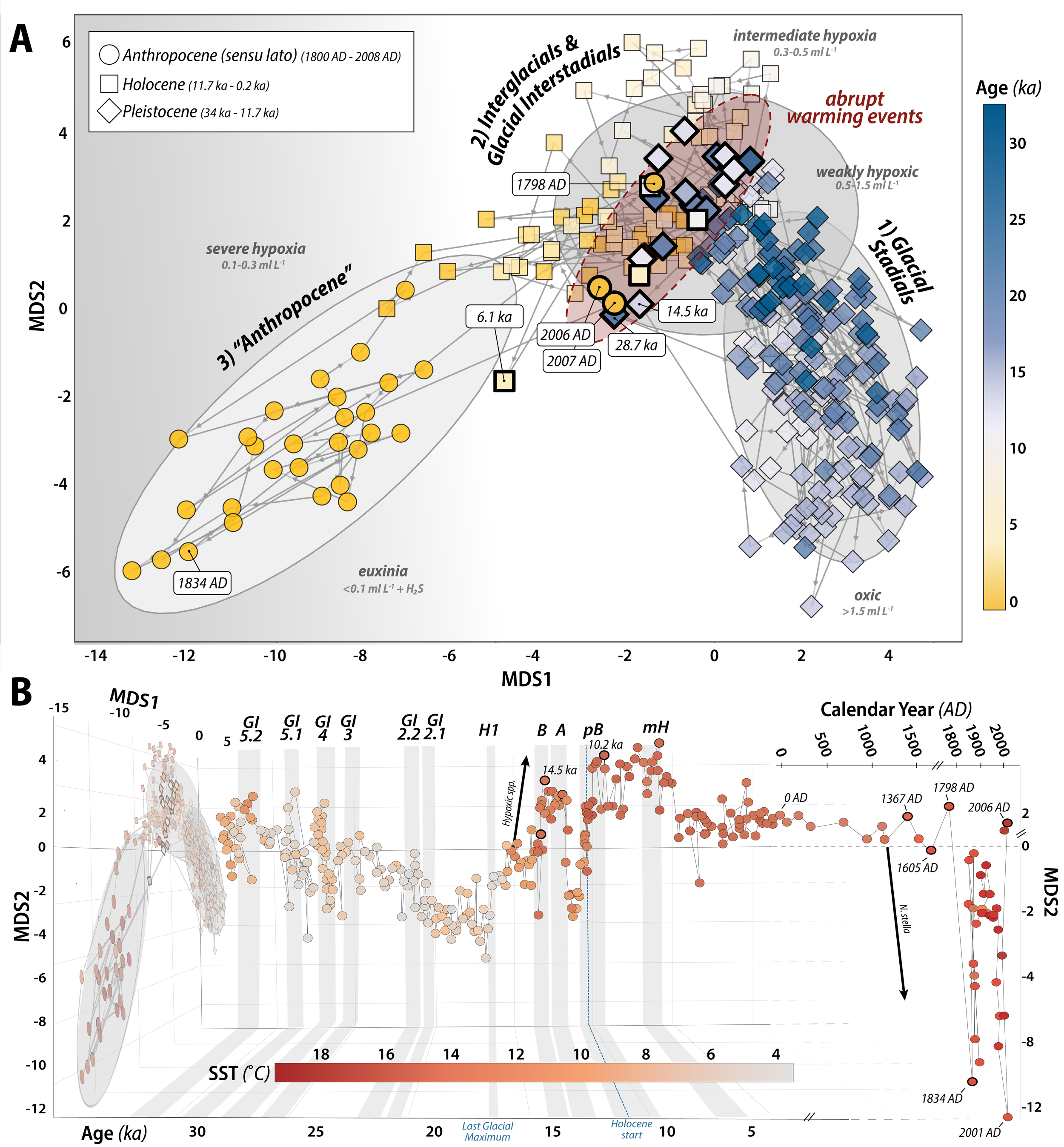
Deep-time perspectives are necessary for placing modern ecosystem states into geologic context and determining whether contemporary changes are unique across Earth history.
We amassed sub-decadal paleoecological data from the California Current System to examine how benthic ecosystem structure evolved over the past 34,000 years in the Santa Barbara Basin—an interval including the Last Glacial Maximum, the transition to the Holocene interglacial, and the period of growing human presence.
We show that even deep-sea ecosystems of the past several centuries are distinct from those at any other point in the last 34,000 years, reflecting human-influenced increases in sedimentation rates, oxygen depletion, and nutrient loading. We take advantage of cross-timescale data from the SBB to show that a key driver of this ecological regime shift was land-use change associated with European colonization of California. We suggest these communities are reflective of the anthropocene sensu lato, indicating that colonial-era land use in the 1800s AD drove the emergence of a novel ecosystem state more than a century before global climate warming began in earnest.